Ditapis dengan
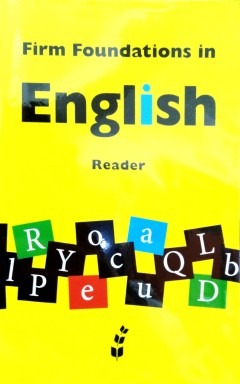
Firm Foundations in English: Reader (Revised Edition)
- Edisi
- -
- ISBN/ISSN
- 978-1-61870-778-9
- Deskripsi Fisik
- 219 hlm.: Ilus.; 13x20,5 cm
- Judul Seri
- -
- No. Panggil
- 421.55 FIR f
- Edisi
- -
- ISBN/ISSN
- 978-1-61870-778-9
- Deskripsi Fisik
- 219 hlm.: Ilus.; 13x20,5 cm
- Judul Seri
- -
- No. Panggil
- 421.55 FIR f
Metagestures
"What kinds of knowledge and understandings of the world can be generated – and shared – when we use para-academic techniques and sensibilities to decode or respond to relatively orthodox intellectual objects? And what worlds might be possible if we practiced scholarly work from a place of collaboration and pleasure, as joyful fellow explorers? In Metagestures, presented in a playful tête-…
- Edisi
- -
- ISBN/ISSN
- 9781950192267
- Deskripsi Fisik
- x, 221p.:
- Judul Seri
- -
- No. Panggil
- 813.6 NAP m

Participatory reading in late-medieval England
This book explores how modern media practices can illuminate participatory reading in England from the late-fourteenth to the early-sixteenth centuries. Nonlinear apprehension, immersion and embodiment are practices intimately familiar to readers of Wikipedia, players of video games and users of multi-touch mobile devices. But far from being unique to digital media, they have clear analogues in…
- Edisi
- -
- ISBN/ISSN
- 9781526118004
- Deskripsi Fisik
- -
- Judul Seri
- -
- No. Panggil
- 820.9001 BLA p
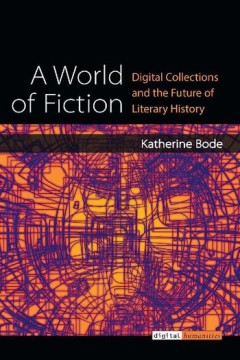
A world of fiction :digital collections and the future of literary history
During the 19th century, throughout the Anglophone world, most fiction was first published in periodicals. In Australia, newspapers were not only the main source of periodical fiction, but the main source of fiction in general. Because of their importance as fiction publishers, and because they provided Australian readers with access to stories from around the world—from Britain, America and …
- Edisi
- -
- ISBN/ISSN
- 9780472130856
- Deskripsi Fisik
- viii, 252p. : ill.
- Judul Seri
- -
- No. Panggil
- 809.3034 BOD a
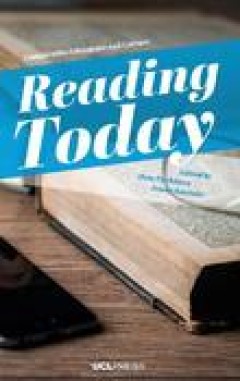
Reading Today
New technologies are changing our reading habits. Laptops, e-readers, tablets and other handheld devices supply new platforms for reading, and we must learn to manage them by scrolling, clicking or tapping. Reading Today places reading in current literary and cultural contexts in order to analyse how these contexts challenge our conceptions of who reads, what reading is, how we read, where we r…
- Edisi
- -
- ISBN/ISSN
- 9781787351950
- Deskripsi Fisik
- X, 199 p.
- Judul Seri
- -
- No. Panggil
- 028 REA r
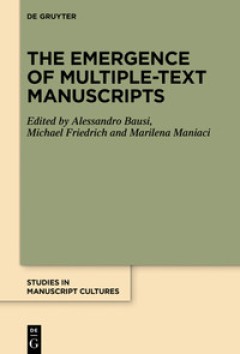
The emergence of multiple-text manuscripts
The universal practice of selecting and excerpting, summarizing and canonizing, arranging and organizing texts and visual signs, either in carefully dedicated types of manuscripts or not, is common to all manuscript cultures. Determined by intellectual or practical needs, this process is never neutral in itself. The resulting proximity and juxtaposition of previously distant contents, challenge…
- Edisi
- -
- ISBN/ISSN
- 9783110645989
- Deskripsi Fisik
- XII, 362 p.
- Judul Seri
- -
- No. Panggil
- 809.93384 EME e
 Karya Umum
  Filsafat
  Agama
Agama  Ilmu-ilmu Sosial
  Bahasa
  Ilmu-ilmu Murni
  Ilmu-ilmu Terapan
  Kesenian, Hiburan, dan Olahraga
  Kesusastraan
  Geografi dan Sejarah