Ditapis dengan

World literature, cosmopolitanism, globality :beyond, against, post, otherwise
In view of the current crisis of globalization, this book aims to interrogate one of its key concepts in the past decades: World Literature. In a historical moment where the established focus on transnational identities, linguistic intersections, and other cosmopolitan cultural configurations is being challenged, the contributions of this volume explore possible adjustments, critiques, reconcep…
- Edisi
- -
- ISBN/ISSN
- 9783110641134
- Deskripsi Fisik
- VI, 240 p.
- Judul Seri
- -
- No. Panggil
- 809 WOR w

Authority and authorship in medieval and seventeenth century women's visionar…
In medieval and early modern times, female visionary writers used the mode of prophecy to voice their concerns and ideas, against the backdrop of cultural restrictions and negative stereotypes. In this book, Deborah Frick analyses medieval visionary writings by Julian of Norwich and Margery Kempe in comparison to seventeenth-century visionary writings by authors such as Anna Trapnel, Mary Cary,…
- Edisi
- -
- ISBN/ISSN
- 9783839456897
- Deskripsi Fisik
- 153 p.
- Judul Seri
- -
- No. Panggil
- 421 FRI a

The wealthy, the brilliant, the few :elite education in contemporary American…
How do the US make sense of their own elite educational system, given that it seems to be at odds with core American values, such as equality of opportunity or upward mobility? Sophie Spieler explores scholarly and journalistic investigations, self-representational texts, and fictional narratives revolving around the Ivy League and its peers in order to understand elite education and its peculi…
- Edisi
- -
- ISBN/ISSN
- 9783839457290
- Deskripsi Fisik
- 273 p.
- Judul Seri
- -
- No. Panggil
- 370.73 SPI t

Icelandic folklore and the cultural memory of religious change
This book attempts to understand the origins and development of religious belief in Iceland and greater Scandinavia through the lenses of five carefully selected Icelandic folktales collected in Iceland during the nineteenth century. Each of these five stories has a story of its own: a historical and cultural context, a literary legacy, influences from beliefs of all kinds (orthodox and heterod…
- Edisi
- -
- ISBN/ISSN
- 9781641893763
- Deskripsi Fisik
- VII, 162 p.
- Judul Seri
- -
- No. Panggil
- 398 BRY i
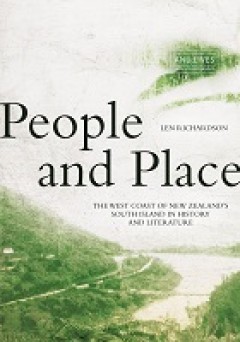
People and place:The West Coast of New Zealand's South Island in history and …
"This book traces the enduring relationship between history, people and place that has shaped the character of a single region in a manner perhaps unique within the New Zealand experience. It explores the evolution of a distinctive regional literature that both shaped and was shaped by the physical and historical environment that inspired it. Looking westwards towards Australia and long shut of…
- Edisi
- -
- ISBN/ISSN
- 9781760463458
- Deskripsi Fisik
- ix, 205p.: ill.
- Judul Seri
- -
- No. Panggil
- 993 RIC p

Dickens after Dickens
"[W]e have a long way to travel before we get back to what Dickens meant… G.K. Chesterton, Charles Dickens The twentieth and twenty-first centuries have continued the quest, so aptly described by G. K. Chesterton in 1906, to ‘find’ Charles Dickens and recapture the characteristically Dickensian. From research attempting to classify and categorise the nature of his popularity to a century …
- Edisi
- -
- ISBN/ISSN
- 9781912482214
- Deskripsi Fisik
- xi, 247p..: ill.
- Judul Seri
- -
- No. Panggil
- 823.8 DIC d

Branding books across the ages:strategies and key concepts in literary branding
As marketing specialists know all too well, our experience of products is prefigured by brands: trademarks that identify a product and differentiate it from its competitors. This process of branding has hitherto gained little academic discussion in the field of literary studies. Literary authors and the texts they produce, though, are constantly 'branded': from the early modern period onwards, …
- Edisi
- -
- ISBN/ISSN
- 9789048544400
- Deskripsi Fisik
- 372 p.
- Judul Seri
- -
- No. Panggil
- 002.09 BRA b
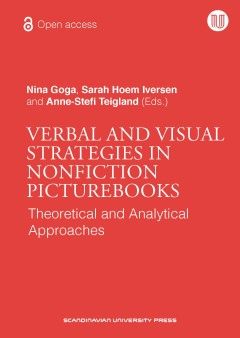
Verbal and visual strategies in nonfiction picturebooks:theoretical and analy…
This edited volume presents new approaches to better understand how knowledge is presented verbally and visually in children’s and young adult nonfiction picturebooks. Nonfiction for children and young adults has existed alongside fiction ever since the very first texts for children appeared. However, in the field of children’s literature, there are few critical, theoretical and analytical …
- Edisi
- -
- ISBN/ISSN
- 9788215042459
- Deskripsi Fisik
- ix, 279p.: ill.
- Judul Seri
- -
- No. Panggil
- 808.02 GOG v
 Karya Umum
  Filsafat
  Agama
Agama  Ilmu-ilmu Sosial
  Bahasa
  Ilmu-ilmu Murni
  Ilmu-ilmu Terapan
  Kesenian, Hiburan, dan Olahraga
  Kesusastraan
  Geografi dan Sejarah