Ditapis dengan
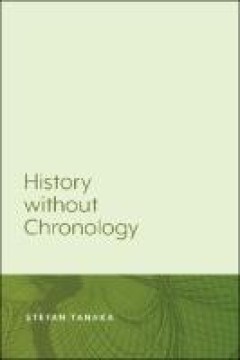
History without chronology
Although numerous disciplines recognize multiple ways of conceptualizing time, Stefan Tanaka argues that scholars still overwhelmingly operate on chronological and linear Newtonian or classical time that emerged during the Enlightenment. This short, approachable book implores the humanities and humanistic social sciences to actively embrace the richness of different times that are evident in no…
- Edisi
- -
- ISBN/ISSN
- 9781643150048
- Deskripsi Fisik
- XIV, 202 p.
- Judul Seri
- -
- No. Panggil
- 115 TAN h

Sequence comparison in historical linguistics
The comparison of sound sequences (words, morphemes) constitutes the core of many techniques and methods in historical linguistics. With the help of these techniques, corresponding sounds can be determined, historically related words can be identified, and the history of languages can be uncovered. So far, the application of traditional techniques for sequence comparison is very tedious and tim…
- Edisi
- -
- ISBN/ISSN
- 9783110720082
- Deskripsi Fisik
- XIV, 307 p.
- Judul Seri
- -
- No. Panggil
- 417.70285 LIS s

History and cultural memory in neo-Victorian fiction:Victorian afterimages
History and Cultural Memory in Neo-Victorian Fiction combines innovative literary and historiographical analysis to investigate the way neo-Victorian novels conceptualise our relationship to the Victorian past, and to analyse their role in the production and communication of historical knowledge. Positioning neo-Victorian novels as dynamic participants in the contemporary historical imaginary, …
- Edisi
- -
- ISBN/ISSN
- 978023022858
- Deskripsi Fisik
- ix, 222 p. ; 23 cm.
- Judul Seri
- -
- No. Panggil
- 823.809358 MIT h
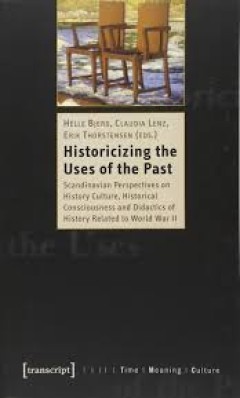
Historicizing the uses of the past
This book presents new developments in Scandinavian memory cultures related to World War II and the Holocaust by combining this focus with the perspective of history didactics. The theoretical framework of historical consciousness offers an approach linking individual and collective uses and re-uses of the past to the question how history can and should be taught. It also offers some examples o…
- Edisi
- -
- ISBN/ISSN
- 9783837613254
- Deskripsi Fisik
- -
- Judul Seri
- -
- No. Panggil
- 948.062 HIS h

Art markets and digital histories
This Special Issue of Arts investigates the use of digital methods in the study of art markets and their histories. As historical and contemporary data is rapidly becoming more available, and digital technologies are becoming integral to research in the humanities and social sciences, we sought to bring together contributions that reflect on the different strategies that art market scholars emp…
- Edisi
- -
- ISBN/ISSN
- 9783039219711
- Deskripsi Fisik
- IX, 144 p.
- Judul Seri
- -
- No. Panggil
- 700 RAS a
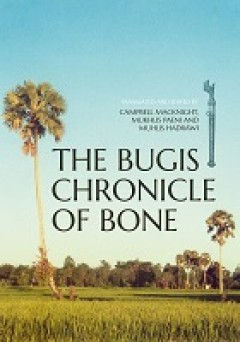
The Bugis chronicle of Bone
"The Bugis Chronicle of Bone is a masterwork in the historiographical tradition of South Sulawesi in Indonesia. Written in the late seventeenth century for a very specific political purpose, it describes the steady growth of the kingdom of Bone from the fourteenth century onwards. The local conquests of the fifteenth century, closely linked to agricultural expansion, give way to the long confli…
- Edisi
- -
- ISBN/ISSN
- 9781760463588
- Deskripsi Fisik
- X!!, 153 p.
- Judul Seri
- -
- No. Panggil
- 958.9 BUG b
 Karya Umum
  Filsafat
  Agama
Agama  Ilmu-ilmu Sosial
  Bahasa
  Ilmu-ilmu Murni
  Ilmu-ilmu Terapan
  Kesenian, Hiburan, dan Olahraga
  Kesusastraan
  Geografi dan Sejarah