Ditapis dengan
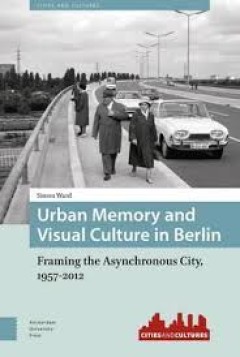
Urban memory and visual culture in Berlin:framing the asynchronous city, 1957…
As sites of turbulence and transformation, cities are machines for forgetting. And yet archiving and exhibiting the presence of the past remains a key cultural, political and economic activity in many urban environments. This book takes the example of Berlin over the past four decades to chart how the memory culture of the city has responded to the challenges and transformations thrown up by th…
- Edisi
- -
- ISBN/ISSN
- 9789089648532
- Deskripsi Fisik
- 212 pages : illustrations; 24 cm.
- Judul Seri
- -
- No. Panggil
- 153 WAR u
Sport, recreation and green space in the European city
Green space has become a major issue in European cities in recent years as a result of enhanced environmental awareness, urban marketing, planning policy and growing population densities. Up to now, however, the subject of sports areas and grounds has attracted little research, despite the fact that since the First World War such public and private areas – from football pitches and running tr…
- Edisi
- -
- ISBN/ISSN
- 9789522227911
- Deskripsi Fisik
- 220 p. : ill., maps ; 25 cm.
- Judul Seri
- -
- No. Panggil
- 796 SPO s
Sociology in Germany :a history
This open access book traces the development of sociology in Germany from the late 19th century to the present day, providing a concise overview of the main actors, institutional processes, theories, methods, topics and controversies. Throughout the book, the author relates the discipline’s history to its historical, economic, political and cultural contexts. The book begins with sociology in…
- Edisi
- -
- ISBN/ISSN
- 9783030718664
- Deskripsi Fisik
- xi, 222p. : ill.
- Judul Seri
- -
- No. Panggil
- 301.0943 MOE s

Researching new religious movements :responses and redefinitions
New religious movements such as the Moonies, Jehovah's Witnesses and Hare Krishnas are now well established in mainstream cultural consciousness. But responses to these 'cult' groups still tend to be overwhelmingly negative, characterized by the furious reactions that they evoke from majority interests. Modern societies need to learn how best to respond to such movements, and how to interpret t…
- Edisi
- -
- ISBN/ISSN
- 9780203642375
- Deskripsi Fisik
- viii, 389p. : ill.
- Judul Seri
- -
- No. Panggil
- 200.7041 ARW r

Design science and its importance in the German mathematics educational discu…
This ICME-13 Topical Survey reviews the state-of-the-art by first exploring the roots and scope of design science. Second, it presents two examples of current design science projects that focus on substantial learning environments including a student and a teacher perspective. Subsequently, the book elaborates on how empirical research can be conceptualised within design science. Lastly, it exp…
- Edisi
- -
- ISBN/ISSN
- 9783319435428
- Deskripsi Fisik
- vii, 43p. : ill.
- Judul Seri
- -
- No. Panggil
- 510.71 DES d

Public administration in Germany
This open access book presents a topical, comprehensive and differentiated analysis of Germany’s public administration and reforms. It provides an overview on key elements of German public administration at the federal, Länder and local levels of government as well as on current reform activities of the public sector. It examines the key institutional features of German public administration…
- Edisi
- -
- ISBN/ISSN
- 9783030536978
- Deskripsi Fisik
- xxiv, 416p. : ill.
- Judul Seri
- -
- No. Panggil
- 351.43 PUB p
Crime and Criminal Justice in Modern Germany
The history of criminal justice in modern Germany has become a vibrant field of research, as demonstrated in this volume. Following an introductory survey, the twelve chapters examine major topics in the history of crime and criminal justice from Imperial Germany, through the Weimar and Nazi eras, to the early postwar years. These topics include case studies of criminal trials, the development …
- Edisi
- -
- ISBN/ISSN
- 9781782382478
- Deskripsi Fisik
- -
- Judul Seri
- -
- No. Panggil
- 364.943 WET c
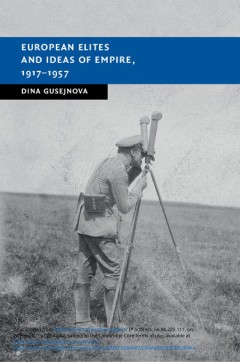
European elites and ideas of empire, 1917-1957
Who thought of Europe as a community before its economic integration in 1957? Dina Gusejnova illustrates how a supranational European mentality was forged from depleted imperial identities. In the revolutions of 1917 to 1920, the power of the Hohenzollern, Habsburg and Romanoff dynasties over their subjects expired. Even though Germany lost its credit as a world power twice in that century, in …
- Edisi
- -
- ISBN/ISSN
- 9781316343050
- Deskripsi Fisik
- xlviii, 344p. : ill.
- Judul Seri
- -
- No. Panggil
- 325.309409041 GUS e
 Karya Umum
  Filsafat
  Agama
Agama  Ilmu-ilmu Sosial
  Bahasa
  Ilmu-ilmu Murni
  Ilmu-ilmu Terapan
  Kesenian, Hiburan, dan Olahraga
  Kesusastraan
  Geografi dan Sejarah