Ditapis dengan

Backpackneymoon
- Edisi
- Cet. 1
- ISBN/ISSN
- 978-602-1246-96-2
- Deskripsi Fisik
- vi, 210 hlm.; 12,9x20,5 cm
- Judul Seri
- -
- No. Panggil
- 910.4 SUS b
- Edisi
- Cet. 1
- ISBN/ISSN
- 978-602-1246-96-2
- Deskripsi Fisik
- vi, 210 hlm.; 12,9x20,5 cm
- Judul Seri
- -
- No. Panggil
- 910.4 SUS b
A world of fiction :digital collections and the future of literary history
During the 19th century, throughout the Anglophone world, most fiction was first published in periodicals. In Australia, newspapers were not only the main source of periodical fiction, but the main source of fiction in general. Because of their importance as fiction publishers, and because they provided Australian readers with access to stories from around the world—from Britain, America and …
- Edisi
- -
- ISBN/ISSN
- 9780472130856
- Deskripsi Fisik
- viii, 252p. : ill.
- Judul Seri
- -
- No. Panggil
- 809.3034 BOD a
Professional social work in Australia
This is an unchanged republication of the first historical account of the social work profession in Australia. It traces the development of social work education and professional social work in the larger, more industrialised societies overseas before the same developments began in Australia in the late 1920s, and it notes the part played by overseas influence in the subsequent 30-odd years. Th…
- Edisi
- -
- ISBN/ISSN
- 9781921934278
- Deskripsi Fisik
- xvii, 241 p. tables. 25 cm.
- Judul Seri
- -
- No. Panggil
- 361.320994 LAW p
The information systems academic discipline in Australia
This book represents the second phase of a multi-method, multi-study of the ‘Information Systems Academic Discipline in Australia’. Drawing on Whitley’s Theory of Scientific Change, the study analysed the degree of ‘professionalisation’ of the Information Systems Discipline, the overarching research question being ‘To what extent is Information Systems a distinct and mature discipli…
- Edisi
- -
- ISBN/ISSN
- 9781921313943
- Deskripsi Fisik
- XXVII, 346
- Judul Seri
- -
- No. Panggil
- 004.6 INF i
Australian indigenous knowledge and libraries
In response to significant changes in the Indigenous information landscape, the State Library of New South Wales and Jumbunna Indigenous House of Learning at the University of Technology, Sydney, hosted a colloquium, Libraries and Indigenous Knowledge, in December 2004. The two-day colloquium brought together professionals, practitioners and academics to discuss future directions in relation to…
- Edisi
- -
- ISBN/ISSN
- 9780980284010
- Deskripsi Fisik
- V, 179 p.
- Judul Seri
- -
- No. Panggil
- 027.630899915 AUS a
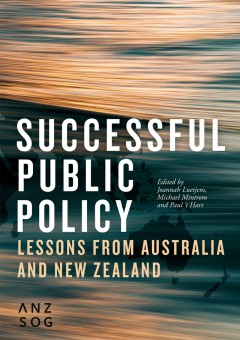
Successful Public Policy:Lessons from Australia and New Zealand
In Australia and New Zealand, many public projects, programs and services perform well. But these cases are consistently underexposed and understudied. We cannot properly ‘see’—let alone recognise and explain—variations in government performance when media, political and academic discourses are saturated with accounts of their shortcomings and failures, but are next to silent on their a…
- Edisi
- -
- ISBN/ISSN
- 9781760462796
- Deskripsi Fisik
- xix, 529p. : ill.
- Judul Seri
- -
- No. Panggil
- 320.994 SUC s
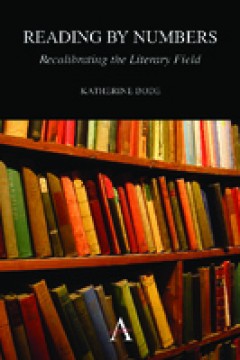
Reading by numbers :recalibrating the literary field
Reading by Numbers: Recalibrating the Literary Field’ is the first book to use digital humanities strategies to integrate the scope and methods of book and publishing history with issues and debates in literary studies. By mining, visualising and modelling data from ‘AustLit’ – an online bibliography of Australian literature that leads the world in its comprehensiveness and scope – th…
- Edisi
- -
- ISBN/ISSN
- 9780857284549
- Deskripsi Fisik
- ix, 237 p.; 22 cm.
- Judul Seri
- -
- No. Panggil
- 820.9’994 BOD r
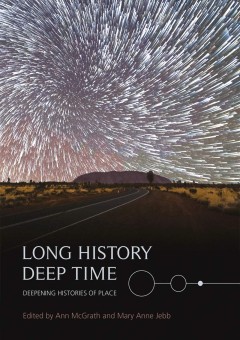
Long history, deep time. Deepening histories of place
The vast shape-shifting continent of Australia enables us to take a long view of history. We consider ways to cross the great divide between the deep past and the present. Australia’s human past is not a short past, so we need to enlarge the scale and scope of history beyond 1788. In ways not so distant, these deeper times happened in the same places where we walk today. Yet, they were not th…
- Edisi
- -
- ISBN/ISSN
- 9781925022520
- Deskripsi Fisik
- 241 p.; 22 cm.
- Judul Seri
- -
- No. Panggil
- 994.0049915 LON l
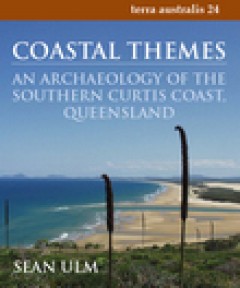
Coastal Themes:An Archaeology of the Southern Curtis Coast, Queensland
Archeology; Aboriginal australians; Antiquities; Queensland; Australia
- Edisi
- -
- ISBN/ISSN
- 9781920942960
- Deskripsi Fisik
- XXVII, 314 p.
- Judul Seri
- -
- No. Panggil
- 994.01 ULM c
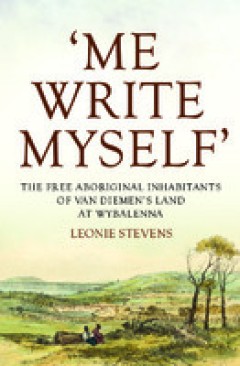
'Me write myself':the free aboriginal inhabitants of Van Diemen's Land at Wyb…
Exiles, lost souls, remnants of a dying race ... The fate of the First Nations peoples of Van Diemens Land is one of the most infamous chapters in Australian history. The men, women and children exiled to Flinders Island in the 1830s and 40s have often been written about, but never allowed to speak for themselves. This book aims to change that. Documents penned by the exiles during their 15 yea…
- Edisi
- -
- ISBN/ISSN
- 9781925523867
- Deskripsi Fisik
- xliv, 356 pages : ill, maps ; 20 cm
- Judul Seri
- -
- No. Panggil
- 994.60049915 STE m
 Karya Umum
  Filsafat
  Agama
Agama  Ilmu-ilmu Sosial
  Bahasa
  Ilmu-ilmu Murni
  Ilmu-ilmu Terapan
  Kesenian, Hiburan, dan Olahraga
  Kesusastraan
  Geografi dan Sejarah