Ditapis dengan
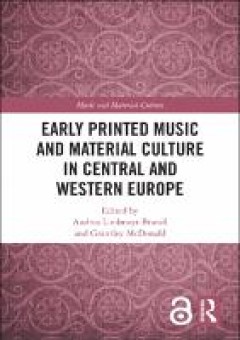
Early printed music and material culture in Central and Western Europe
This book presents a varied and nuanced analysis of the dynamics of the printing, publication, and trade of music in the sixteenth and early seventeenth centuries across Western and Northern Europe. Chapters consider dimensions of music printing in Britain, the Holy Roman Empire, the Netherlands, France, Spain and Italy, showing how this area of inquiry can engage a wide range of cultural, hist…
- Edisi
- -
- ISBN/ISSN
- 9780429342844
- Deskripsi Fisik
- XXI, 333 p.
- Judul Seri
- -
- No. Panggil
- 070.5794094 EAR e

Materialized identities in early modern culture, 1450-1750 :objects, affects,…
"This collection embraces the increasing interest in the material world of the Renaissance and the early modern period, which has both fascinated contemporaries and initiated in recent years a distinguished historiography. The scholarship within is distinctive for engaging with the agentive qualities of matter, showing how affective dimensions in history connect with material history, and explo…
- Edisi
- -
- ISBN/ISSN
- 9789048554058
- Deskripsi Fisik
- -, 417 p.; ill
- Judul Seri
- -
- No. Panggil
- 700 MAT m

Surgery and selfhood in early modern England :altered bodies and contexts of …
Offering an innovative perspective on early modern debates concerning embodiment, Alanna Skuse examines diverse kinds of surgical alteration, from mastectomy to castration, and amputation to facial reconstruction. Body-altering surgeries had profound socio-economic and philosophical consequences. They reached beyond the physical self, and prompted early modern authors to develop searching quest…
- Edisi
- -
- ISBN/ISSN
- 9781108919395
- Deskripsi Fisik
- vii, 201p. : ill.
- Judul Seri
- -
- No. Panggil
- 617.094 SKU s

Scholars in exile:the Ukranian intellectual world in interwar Czechoslovakia
Throughout the 1920s and 30s Prague was the intellectual center of Ukrainian émigrés in Europe, not least because of significant financial support from the Czechoslovak government and its first president, Tomáš Garrigue Masaryk, for émigré students and intellectuals. On the basis of extensive archival research in Ottawa, Prague, and Kyiv, Zavorotna outlines the continuation of Ukrainian s…
- Edisi
- -
- ISBN/ISSN
- 9781487530204
- Deskripsi Fisik
- xvi, 260p.: ill.
- Judul Seri
- -
- No. Panggil
- 943.700491791009042 ZAV s
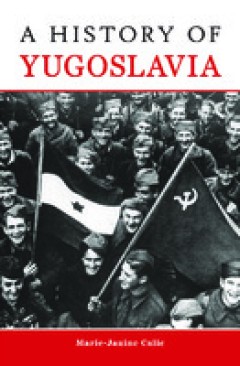
History of yugoslavia
Why did Yugoslavia fall apart? Was its violent demise inevitable? Did its population simply fall victim to the lure of nationalism? How did this multinational state survive for so long, and where do we situate the short life of Yugoslavia in the long history of Europe in the twentieth century? The Complete History of Yugoslavia by Marie-Janine Calic provides a concise, accessible, comprehensive…
- Edisi
- -
- ISBN/ISSN
- 9781557538499.
- Deskripsi Fisik
- xxiii, 418p.: ill.
- Judul Seri
- -
- No. Panggil
- 949.702 CAL
Cultural sovereignty beyond the modern state :space, objects, and media
In the past 25 years or more, political observers have diagnosed a crisis of the sovereign nation state and the erosion of state sovereignty through supranational institutions and the global mobility of capital, goods, information and labour. This edition of the European History Yearbook seeks to use "cultural sovereignty" as a heuristic concept to provide new views on these developments since …
- Edisi
- -
- ISBN/ISSN
- 9783110679151
- Deskripsi Fisik
- II, 181 p.
- Judul Seri
- -
- No. Panggil
- 320.15 CUL c
Cultural sovereignty beyond the modern state :space, objects, and media
In the past 25 years or more, political observers have diagnosed a crisis of the sovereign nation state and the erosion of state sovereignty through supranational institutions and the global mobility of capital, goods, information and labour. This edition of the European History Yearbook seeks to use "cultural sovereignty" as a heuristic concept to provide new views on these developments since …
- Edisi
- -
- ISBN/ISSN
- 9783110679151
- Deskripsi Fisik
- II, 181 p.
- Judul Seri
- -
- No. Panggil
- 320.15 CUL c
 Karya Umum
  Filsafat
  Agama
Agama  Ilmu-ilmu Sosial
  Bahasa
  Ilmu-ilmu Murni
  Ilmu-ilmu Terapan
  Kesenian, Hiburan, dan Olahraga
  Kesusastraan
  Geografi dan Sejarah