Ditapis dengan

Dynamics of long-life assets :from technology adaptation to upgrading the bus…
The editors present essential methods and tools to support a holistic approach to the challenge of system upgrades and innovation in the context of high-value products and services. The approach presented here is based on three main pillars: an adaptation mechanism based on a broad understanding of system dependencies; efficient use of system knowledge through involvement of actors throughout t…
- Edisi
- -
- ISBN/ISSN
- 9783319454382
- Deskripsi Fisik
- xxvi, 356p. : ill.
- Judul Seri
- -
- No. Panggil
- 658.514 GRO d
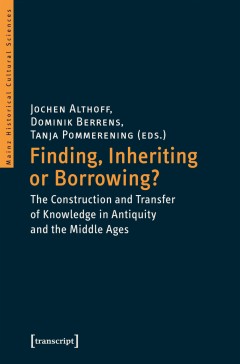
Finding, inheriting or borrowing? The construction and transfer of knowledge …
Since the dawn of humanity, people have developed concepts about themselves and the natural world in which they live. This volume aims at investigating the construction and transfer of such concepts between and within various ancient and medieval cultures. The single contributions try to answer questions concerning the sources of knowledge, the strategies of transfer and legitimation as well as…
- Edisi
- -
- ISBN/ISSN
- 9783839442364
- Deskripsi Fisik
- 408 p.; 22 cm.
- Judul Seri
- -
- No. Panggil
- 900 FIN f
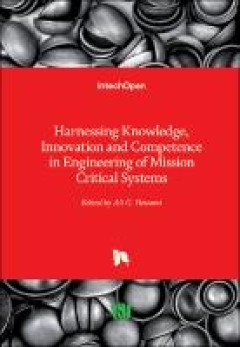
Harnessing knowledge, innovation and competence in engineering of mission cri…
This book explores the critical role of acquisition, application, enhancement, and management of knowledge and human competence in the context of the largely digital and data/information dominated modern world. Whilst humanity owes much of its achievements to the distinct capability to learn from observation, analyse data, gain insights, and perceive beyond original realities, the systematic tr…
- Edisi
- -
- ISBN/ISSN
- 9781789844672
- Deskripsi Fisik
- XIII, 177 p.
- Judul Seri
- -
- No. Panggil
- 658.4038 HAR h
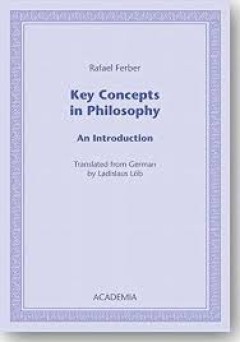
Key concepts in philosophy:an introduction
The book provides an introduction to six fundamental philosophy concepts - philosophy, language, knowledge, truth, being and good. At the same time, it aims to initiate its readers into the process of philosophical thinking. The book is addressed to students and laypeople, but also contains new ideas for specialists. It is written in a clear, accessible and engaging style, and its author "share…
- Edisi
- -
- ISBN/ISSN
- 9783896656483
- Deskripsi Fisik
- 1 online resource (242 pages)
- Judul Seri
- -
- No. Panggil
- 100 FER k

The challenge of chance :a multidisciplinary approach from science and the hu…
This book presents a multidisciplinary perspective on chance, with contributions from distinguished researchers in the areas of biology, cognitive neuroscience, economics, genetics, general history, law, linguistics, logic, mathematical physics, statistics, theology and philosophy. The individual chapters are bound together by a general introduction followed by an opening chapter that surveys 2…
- Edisi
- -
- ISBN/ISSN
- 9783319263007
- Deskripsi Fisik
- vii, 276p. : ill.
- Judul Seri
- -
- No. Panggil
- 123.3 KLA t
 Karya Umum
  Filsafat
  Agama
Agama  Ilmu-ilmu Sosial
  Bahasa
  Ilmu-ilmu Murni
  Ilmu-ilmu Terapan
  Kesenian, Hiburan, dan Olahraga
  Kesusastraan
  Geografi dan Sejarah