Ditapis dengan
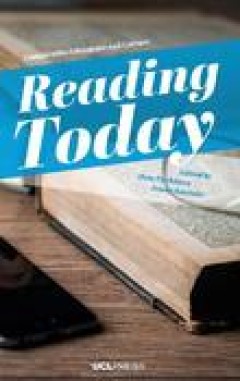
Reading Today
New technologies are changing our reading habits. Laptops, e-readers, tablets and other handheld devices supply new platforms for reading, and we must learn to manage them by scrolling, clicking or tapping. Reading Today places reading in current literary and cultural contexts in order to analyse how these contexts challenge our conceptions of who reads, what reading is, how we read, where we r…
- Edisi
- -
- ISBN/ISSN
- 9781787351950
- Deskripsi Fisik
- X, 199 p.
- Judul Seri
- -
- No. Panggil
- 028 REA r
Mythodologies:Methods in Medieval Studies, Chaucer, and Book History
Mythodologies challenges the implied methodology in contemporary studies in the humanities. We claim, at times, that we gather facts or what we will call evidence, and from that form hypotheses and conclusions. Of course, we recognize that the sum total of evidence for any argument is beyond comprehension; therefore, we construct, and we claim, preliminary hypotheses, perhaps to organize the ch…
- Edisi
- -
- ISBN/ISSN
- 9781947447578
- Deskripsi Fisik
- 292 p.
- Judul Seri
- -
- No. Panggil
- 001.30721 DAN m
INDOMARC :format Marc Indonesia = The Indonesian Marc Format
“Machine Readable Cataloging” (MARC) merupakan salah satu hasil dan juga sekaligus salah satu syarat dalam otomasi perpustakaan. Dikembangkan pertama kali oleh Library of Congress, format LC MARC ternyata sangat besar manfaatnya bagi penyebaran data katalogisasi bahan pustaka ke berbagai perpustakaan di Amerika Serikat. Keberhasilan ini membuat negara lain turut mengembangkan forrmat MARC s…
- Edisi
- -
- ISBN/ISSN
- 9789790084049
- Deskripsi Fisik
- xviii, 320p.
- Judul Seri
- -
- No. Panggil
- 025.316 PER i
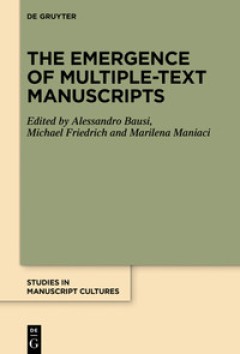
The emergence of multiple-text manuscripts
The universal practice of selecting and excerpting, summarizing and canonizing, arranging and organizing texts and visual signs, either in carefully dedicated types of manuscripts or not, is common to all manuscript cultures. Determined by intellectual or practical needs, this process is never neutral in itself. The resulting proximity and juxtaposition of previously distant contents, challenge…
- Edisi
- -
- ISBN/ISSN
- 9783110645989
- Deskripsi Fisik
- XII, 362 p.
- Judul Seri
- -
- No. Panggil
- 809.93384 EME e
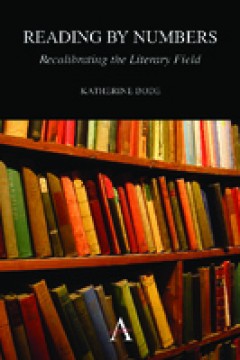
Reading by numbers :recalibrating the literary field
Reading by Numbers: Recalibrating the Literary Field’ is the first book to use digital humanities strategies to integrate the scope and methods of book and publishing history with issues and debates in literary studies. By mining, visualising and modelling data from ‘AustLit’ – an online bibliography of Australian literature that leads the world in its comprehensiveness and scope – th…
- Edisi
- -
- ISBN/ISSN
- 9780857284549
- Deskripsi Fisik
- ix, 237 p.; 22 cm.
- Judul Seri
- -
- No. Panggil
- 820.9’994 BOD r
 Karya Umum
  Filsafat
  Agama
Agama  Ilmu-ilmu Sosial
  Bahasa
  Ilmu-ilmu Murni
  Ilmu-ilmu Terapan
  Kesenian, Hiburan, dan Olahraga
  Kesusastraan
  Geografi dan Sejarah