Ditapis dengan
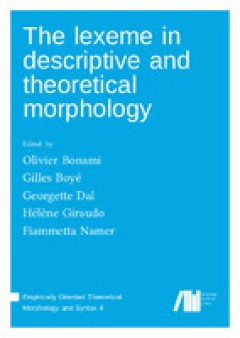
The lexeme indescriptive and theoretical morphology
After being dominant during about a century since its invention by Baudouin de Courtenay at the end of the nineteenth century, morpheme is more and more replaced by lexeme in contemporary descriptive and theoretical morphology. The notion of a lexeme is usually associated with the work of P. H. Matthews (1972, 1974), who characterizes it as a lexical entity abstracting over individual inflected…
- Edisi
- -
- ISBN/ISSN
- 9783961101108
- Deskripsi Fisik
- -
- Judul Seri
- -
- No. Panggil
- 415.92 LEX l
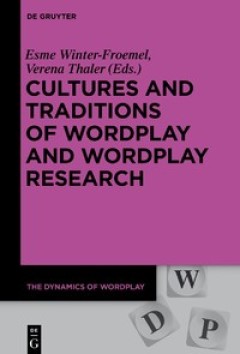
Cultures and traditions of wordplay and wordplay research
This volume focuses on realisations of wordplay in different cultures and social and historical contexts, and brings together various research traditions of approaching wordplay. Together with the volume DWP 7, it assembles selected papers presented at the interdisciplinary conference The Dynamics of Wordplay / La dynamique du jeu de mots (Trier, 2016) and stresses the inherent dynamicity of wo…
- Edisi
- -
- ISBN/ISSN
- 9783110586374
- Deskripsi Fisik
- VI, 294 p.
- Judul Seri
- -
- No. Panggil
- 401.41 CUL c
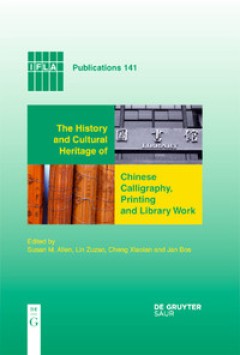
The history and cultural heritage of Chinese calligraphy, printing and librar…
In China the tradition of a book society is longer than anywhere else in the world. Chinese paper making, calligraphy and woodblock printing date from very early ages, but have for a very long time remained almost unknown to the Western world. At the IFLA satellite meeting “Chinese Written and Printed Cultural Heritage and Library Work” in Hangzhou in 2006 the richness of present day book h…
- Edisi
- -
- ISBN/ISSN
- 9783598441790
- Deskripsi Fisik
- 251 p.
- Judul Seri
- -
- No. Panggil
- 495.1 HIS h
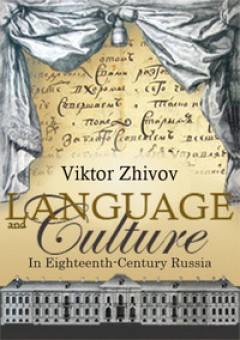
Language and culture in eighteenth century Russia
Victor Zhivov's Language and Culture in Eighteenth-Century Russia is one of the most important studies ever published on eighteenth-century Russia. Historians and students of Russian culture agree that the creation of a Russian literary language was key to the formation of a modern secular culture, and this title traces the growth of a vernacular language from the "hybrid Slavonic" of the late …
- Edisi
- -
- ISBN/ISSN
- 9781618116734
- Deskripsi Fisik
- XVII, 506 p.
- Judul Seri
- -
- No. Panggil
- 491.709033 ZHI l
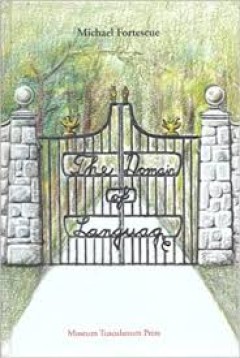
The Domain of language
This book is intended as counter-evidence to the perception that Linguistics is a domain of dusty schoolroom grammar. It follows that linguistics can be characterised differently than as proponents of theoretical orientations who spend their brief breaks from their bone-dry work bashing each other over the head with their various favourite abstractions. The discipline may appear to outsiders as…
- Edisi
- -
- ISBN/ISSN
- 9788772897066
- Deskripsi Fisik
- 392 p.; 22 cm.
- Judul Seri
- -
- No. Panggil
- 410 FOR d
Toward a cognitive classical linguistics :he embodied basis of constructions …
This volume gathers a series of papers that bring the study of grammatical and syntactic constructions in Greek and Latin under the perspective of theories of embodied meaning developed in cognitive linguistics. Building on the momentum currently enjoyed by cognitive-functional approaches to language within the field of Classics, its contributors adopt, in particular, a ‘constructional’ app…
- Edisi
- -
- ISBN/ISSN
- 9783110616347
- Deskripsi Fisik
- VIII, 273 p.
- Judul Seri
- -
- No. Panggil
- 480 MOC t
Rating EFL written performance
The study focuses on the investigation of the process during which raters of EFL written performance make their decisions. It consists of a pilot and a main study, each of which concentrates on assessment of writing. The rationale is to detect the decision-making processes that raters follow, which can be used for training raters, and with which the reliability of rating can be improved. The pi…
- Edisi
- -
- ISBN/ISSN
- 9788376560793
- Deskripsi Fisik
- 424 p.
- Judul Seri
- -
- No. Panggil
- 428.0071 BUK r
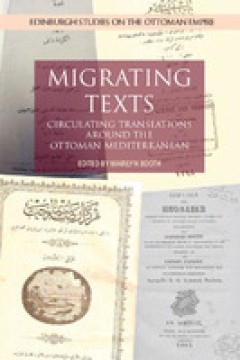
Migrating texts :circulating translations around the Eastern Mediterranean
Explores translation in the context of the multi-lingual, multi-ethnic late-Ottoman Mediterranean world. Fénelon, Offenbach and the Iliad in Arabic, Robinson Crusoe in Turkish, the Bible in Greek-alphabet Turkish, excoriated French novels circulating through the Ottoman Empire in Greek, Arabic and Turkish: literary translation at the eastern end of the Mediterranean offered worldly vistas and …
- Edisi
- -
- ISBN/ISSN
- 9781474439015
- Deskripsi Fisik
- xii, 344 p.; 22 cm.
- Judul Seri
- -
- No. Panggil
- 418.02091822 MIG m
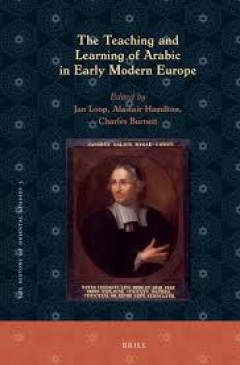
The Teaching and learning of Arabic in early modern Europe
The essays in this volume shed light on how, for what purposes and to what extent the Arabic language was taught and studied by European scholars, theologian, merchants, diplomats and prisoners in early modern Europe.
- Edisi
- -
- ISBN/ISSN
- 9789004338623
- Deskripsi Fisik
- 366 p.; 22 cm.
- Judul Seri
- -
- No. Panggil
- 492.78007104 TEA t
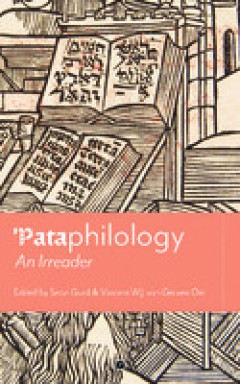
Pataphilology:an irreader
What do the bizzare etymologies of Jean-Pierre Brisset, made-up languages for literary fiction, The Dialectic of Enlightenment, Latin grammarians, Horace’s Epodes, and the Papyrus of Ani have in common? Absolutely nothing. Yet, taken together they provide an unusually coherent picture of a hitherto unacknowledged non-tradition of linguistic investigation. At these moments, particularly within…
- Edisi
- -
- ISBN/ISSN
- 9781947447820
- Deskripsi Fisik
- 240 p.; 22 cm.
- Judul Seri
- -
- No. Panggil
- 401 PAT p
 Karya Umum
  Filsafat
  Agama
Agama  Ilmu-ilmu Sosial
  Bahasa
  Ilmu-ilmu Murni
  Ilmu-ilmu Terapan
  Kesenian, Hiburan, dan Olahraga
  Kesusastraan
  Geografi dan Sejarah