Ditapis dengan
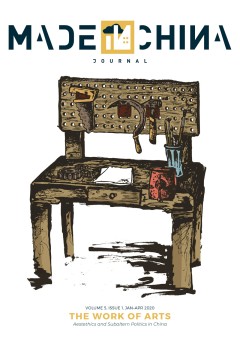
Made in China journal:volume 5, issue 1, 2020
With these words, the great Soviet poet addressed the key question of how to bring art to people and people to art in a new world in which old aristocracies, elites, and their aesthetic privileges were fading away. In the words of art theorist Boris Groys, ‘the world promised by the leaders of the October Revolution was not merely supposed to be a more just one or one that would provide great…
- Edisi
- -
- ISBN/ISSN
- 22069119
- Deskripsi Fisik
- 232p. : ill.
- Judul Seri
- -
- No. Panggil
- 951 MAD m

The Heritage of Arung Palakka:a history of South Sulawesi (Celebes) in the se…
A History of South Sulawesi in the seventeeth century
- Edisi
- -
- ISBN/ISSN
- 9789004287228
- Deskripsi Fisik
- ix, 353 p., [9] p. of plates : maps ; 24 cm.
- Judul Seri
- -
- No. Panggil
- 959.84 AND t
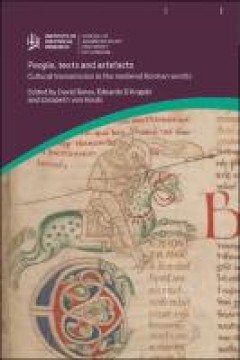
People, texts and artefacts:cultural transmission in the medieval Norman worlds
This volume is based on two international conferences held in 2013 and 2014 at Ariano Irpino, and at Emmanuel College, Cambridge. It contains essays by leading scholars in the field. Like the conferences, the volume seeks to enhance interdisciplinary and international dialogue between those who work on the Normans and their conquests in northern and southern Europe in an original way. This coll…
- Edisi
- -
- ISBN/ISSN
- 9781909646568
- Deskripsi Fisik
- xvii, 284 pages : illustrations (chiefly color) ; 25 cm
- Judul Seri
- -
- No. Panggil
- 940.146 PEO p
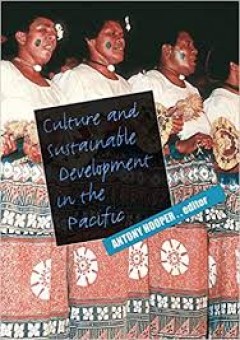
Culture and sustainable development in the Pacific
Sustainable development; Social life; Customs; Civilazation; Pacific area
- Edisi
- -
- ISBN/ISSN
- 192094222X
- Deskripsi Fisik
- xv, 227 p. ; 22 cm.
- Judul Seri
- -
- No. Panggil
- 909.09823 HOO c
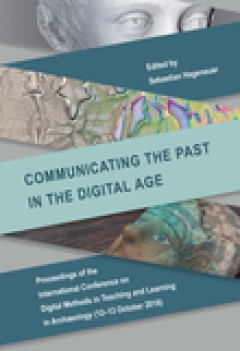
Communicating the past in the digital age
"Recent developments in the field of archaeology are not only progressing archaeological fieldwork but also changing the way we practise and present archaeology today. As these digital technologies are being used more and more every day on excavations or in museums, this also means that we must change the way we approach teaching and communicating archaeology as a discipline. This volume pres…
- Edisi
- -
- ISBN/ISSN
- 9781911529859
- Deskripsi Fisik
- XVII, 203 p.
- Judul Seri
- -
- No. Panggil
- 930.1 HAG c
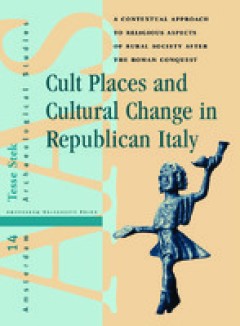
Cult places and cultural change in Republican Italy :a contextual approach to…
This scholarly study throws a new light on the Roman impact on religious structures in Republican Italy. In the last four centuries BC, Italy went through immense changes. The Apennine and Adriatic areas were originally inhabited by various 'Italic' tribes and characterised by a specific non-urban societal organisation, in which cult places had a pivotal function. From the fourth century BC onw…
- Edisi
- -
- ISBN/ISSN
- 9789089641779
- Deskripsi Fisik
- X. 263 p.
- Judul Seri
- -
- No. Panggil
- 939.01 STE c
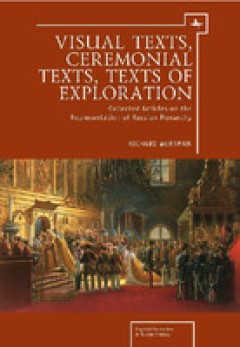
Visual texts, ceremonial texts, texts of exploration :collected articles on t…
Visual Texts, Ceremonial Texts, Texts of Exploration continues the work begun in Russian Monarchy: Representation and Rule, which analyzed the interplay between the symbolic representations of Russian monarchs and the legal and institutional instruments of their rule. The articles in this volume examine the texts that, through various media, revealed the myths and scenarios conveying the goals …
- Edisi
- -
- ISBN/ISSN
- 9781618113474
- Deskripsi Fisik
- XV, 442 p,
- Judul Seri
- -
- No. Panggil
- 947.05 WOR v
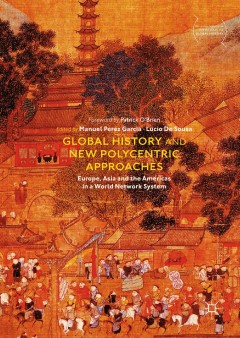
Global history and new polycentric approaches :Europe, Asia and the Americas …
Rethinking the ways global history is envisioned and conceptualized in diverse countries such as China, Japan, Mexico or Spain, this collections considers how global issues are connected with our local and national communities. It examines how the discipline had evolved in various historiographies, from Anglo Saxon to southern European, and its emergence in Asia with the rapid development of th…
- Edisi
- -
- ISBN/ISSN
- 9789811040535
- Deskripsi Fisik
- xxx, 352p. : ill.
- Judul Seri
- -
- No. Panggil
- 901 GLO g
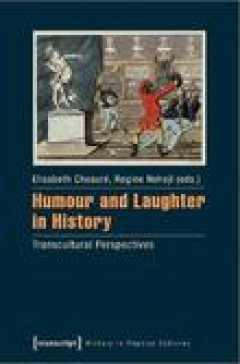
Humour and laughter in history transcultural perspectives
Humour can be used as a »weapon« or as a means of coping with problematic historical events, especially in times of war and crisis. The book presents examples from different cultures (Russia, Europe, USA), from different historical epochs (from the Napoleonic era up to the current time) and from different medias (caricature, journalism, film). By looking at the individual cases it becomes pos…
- Edisi
- -
- ISBN/ISSN
- 9783837628586
- Deskripsi Fisik
- 137 p.; 22 cm.
- Judul Seri
- -
- No. Panggil
- 909 HUM h
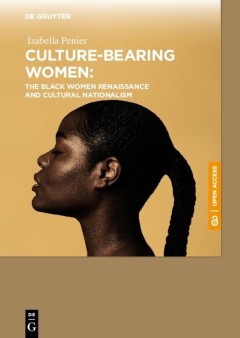
Culture-bearing women. The black women renaissance and cultural nationalism
This study examines the Black Women’s Renaissance (BWR) – the flowering of literary talent among African American women at the end of the 20th century. It focuses on the historical and heritage novels of the 1980s and the vexed relationship between black cultural nationalism and black feminism. It argues that when the nation seemingly fell out of fashion, black women writers sought to re-cr…
- Edisi
- -
- ISBN/ISSN
- 9788395609558
- Deskripsi Fisik
- 220 p.; 22 cm.
- Judul Seri
- -
- No. Panggil
- 940.21 PEN c
 Karya Umum
  Filsafat
  Agama
Agama  Ilmu-ilmu Sosial
  Bahasa
  Ilmu-ilmu Murni
  Ilmu-ilmu Terapan
  Kesenian, Hiburan, dan Olahraga
  Kesusastraan
  Geografi dan Sejarah