Ditapis dengan
The emergence of multiple-text manuscripts
The universal practice of selecting and excerpting, summarizing and canonizing, arranging and organizing texts and visual signs, either in carefully dedicated types of manuscripts or not, is common to all manuscript cultures. Determined by intellectual or practical needs, this process is never neutral in itself. The resulting proximity and juxtaposition of previously distant contents, challenge…
- Edisi
- -
- ISBN/ISSN
- 9783110645989
- Deskripsi Fisik
- XII, 362 p.
- Judul Seri
- -
- No. Panggil
- 809.93384 EME e
Studies on Greek and Coptic majuscule scripts and books
The volume contains a critical review of data, results and open problems concerning the principal Greek and Coptic majuscule bookhands, based on previous research of the author, revised and updated to offer an overview of the different graphic phenomena. Although the various chapters address the history of different types of scripts (i.e. biblical majuscule, sloping poitend majuscule, liturgica…
- Edisi
- -
- ISBN/ISSN
- 9783110575446
- Deskripsi Fisik
- XVI, 260 p.
- Judul Seri
- -
- No. Panggil
- 800 ORS s
Translating Chinese tradition and teaching Tangut culture :manuscripts and pr…
This book is about Tangut translations of Chinese literary texts. Although most of the extant Tangut material comprises Buddhist texts, there are also many non-religious texts, which are mostly translations from Chinese. The central concern is how the Tanguts appropriated Chinese written culture through translation and what their reasons for this were. Of the seven chapters, the first three pro…
- Edisi
- -
- ISBN/ISSN
- 9783110453959
- Deskripsi Fisik
- VIII, 318 p.
- Judul Seri
- -
- No. Panggil
- 895.4 GAL t
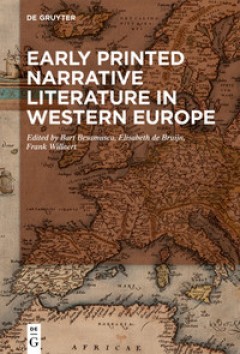
Early printed narrative literature in Western Europe
The essays in this volume are concerned with early printed narrative texts in Western Europe. The aim of this book is to consider to what extent the shift from hand-written to printed books left its mark on narrative literature in a number of vernacular languages. Did the advent of printing bring about changes in the corpus of narrative texts when compared with the corpus extant in manuscript c…
- Edisi
- -
- ISBN/ISSN
- 9783110563016
- Deskripsi Fisik
- X, 396 p.
- Judul Seri
- -
- No. Panggil
- 809.02 EAR e
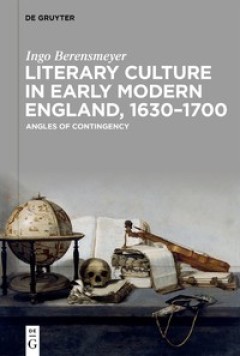
Literary culture in early modern England, 1630–1700 :angles of contingency
This book explores literary culture in England between 1630 and 1700, focusing on connections between material, epistemic, and political conditions of literary writing and reading. In a number of case studies and close readings, it presents the seventeenth century as a period of change that saw a fundamental shift towards a new cultural configuration: neoclassicism. This shift affected a wide a…
- Edisi
- -
- ISBN/ISSN
- 9783110691375
- Deskripsi Fisik
- XII, 282 p.
- Judul Seri
- -
- No. Panggil
- 810.90 BER l
The Girlhood of Shakespeare’s sisters gender, transgression, adolescence
The first sustained study of girls and girlhood in early modern literature and culture. Jennifer Higginbotham makes a persuasive case for a paradigm shift in our current conceptions of the early modern sex-gender system. She challenges the widespread assumption that the category of the 'girl' played little or no role in the construction of gender in early modern English culture. And she demonst…
- Edisi
- -
- ISBN/ISSN
- 9780748655908
- Deskripsi Fisik
- viii, 280 p.; 22 cm.
- Judul Seri
- -
- No. Panggil
- 820.935234209031 HIG g
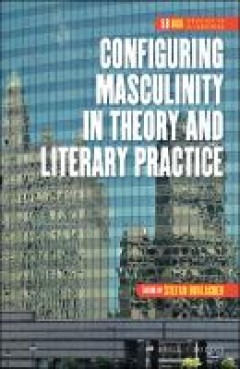
Configuring masculinity in theory and literary practice
Configuring Masculinity in Theory and Literary Practice combines a critical survey of the most important concepts in Masculinity Studies with a historical overview of how masculinity has been constructed within British Literature and a special focus on developments in the 20th and 21st centuries. Readership: This book is of key interest to students, university teachers, and researchers in the f…
- Edisi
- -
- ISBN/ISSN
- 9789004299009
- Deskripsi Fisik
- -
- Judul Seri
- -
- No. Panggil
- 820.9 CON c
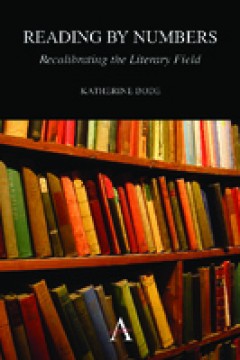
Reading by numbers :recalibrating the literary field
Reading by Numbers: Recalibrating the Literary Field’ is the first book to use digital humanities strategies to integrate the scope and methods of book and publishing history with issues and debates in literary studies. By mining, visualising and modelling data from ‘AustLit’ – an online bibliography of Australian literature that leads the world in its comprehensiveness and scope – th…
- Edisi
- -
- ISBN/ISSN
- 9780857284549
- Deskripsi Fisik
- ix, 237 p.; 22 cm.
- Judul Seri
- -
- No. Panggil
- 820.9’994 BOD r
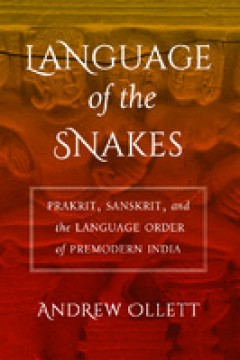
Language of the snakes :prakrit, Sanskrit, and the language order of premoder…
Language of the Snakes traces the history of the Prakrit language as a literary phenomenon, starting from its cultivation in courts of the Deccan in the first centuries of the common era. Although little studied today, Prakrit was an important vector of the kāvya movement and once joined Sanskrit at the apex of classical Indian literary culture. The opposition between Prakrit and Sanskrit was …
- Edisi
- -
- ISBN/ISSN
- 9780520968813
- Deskripsi Fisik
- 324 p.; 22 cm.
- Judul Seri
- -
- No. Panggil
- 891.3 OLL l

Theologies of childhood and the children of Africa
The purpose of this book is to combine perspectives of scholars from Africa on Child Theologies from a variety of theological sub-disciplines to provide some theological and ministerial perspectives on this topic. The book disseminates original research and new developments in this study field, especially as relevant to the African context. In the process it addresses also the global need to he…
- Edisi
- -
- ISBN/ISSN
- 9781928396109
- Deskripsi Fisik
- xx, 326 p.; 22 cm.
- Judul Seri
- -
- No. Panggil
- 822 THE t
 Karya Umum
  Filsafat
  Agama
Agama  Ilmu-ilmu Sosial
  Bahasa
  Ilmu-ilmu Murni
  Ilmu-ilmu Terapan
  Kesenian, Hiburan, dan Olahraga
  Kesusastraan
  Geografi dan Sejarah