Ditapis dengan

Why knowing what to do is not enough :a realistic perspective on self-reliance
This open access book sets out to explain the reasons for the gap between “knowing” and “doing” in view of self-reliance, which is more and more often expected of citizens. In today’s society, people are expected to take responsibility for their own lives and be self-reliant. This is no easy feat. They must be on constant high alert in areas of life such as health, work and personal f…
- Edisi
- -
- ISBN/ISSN
- 9789402417258
- Deskripsi Fisik
- ix, 157p. : ill.
- Judul Seri
- -
- No. Panggil
- 179.9 KEI w

Moral History from Herodotus to Diodorus Siculus
Why did human beings first begin to write history? Lisa Irene Hau argues that a driving force among Greek historians was the desire to use the past to teach lessons about the present and for the future. She uncovers the moral messages of the ancient Greek writers of history and the techniques they used to bring them across. Hau also shows how moral didacticism was an integral part of the writin…
- Edisi
- -
- ISBN/ISSN
- 9781474411073
- Deskripsi Fisik
- VIII, 312 p.
- Judul Seri
- -
- No. Panggil
- 170.938 HAU m

Space in Hellenistic Philosophy :Critical Studies in Ancient Physics
The volume discusses the notion of space by focusing on the most representative exponents of the Hellenistic schools and explores the role played by spatial concepts in both coeval and later authors who, without specifically thematising these concepts, made use of them in a theoretically original way. Renowned scholars investigate the philosophical significance and bring to light the problemati…
- Edisi
- -
- ISBN/ISSN
- 9783110365856
- Deskripsi Fisik
- XII, 224 p.
- Judul Seri
- -
- No. Panggil
- 114.0938 HEL s

Introduction to a Future Way of Thought on Marx and Heidegger
"Technologists only change the world in various ways in generalized indifference; the point is to think the world and interpret the changes in its unfathomability, to perceive and experience the difference binding being to the nothing." Anticipating the age of planetary technology Kostas Axelos, a Greek-French philosopher, approaches the technological question in this book, first published in 1…
- Edisi
- -
- ISBN/ISSN
- 9783957960054
- Deskripsi Fisik
- 183p.
- Judul Seri
- -
- No. Panggil
- 193 INT i
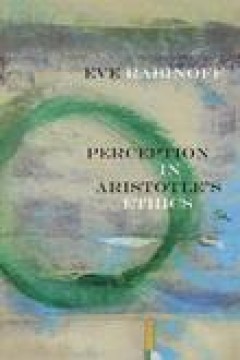
Perception in Aristotle’s Ethics
Rabinoff strives to account for ethical perception (aisthesis) in Aristotle’s ethics—to give it a place of importance in ethical choice and action—and to offer an account of the faculty of perception expansive enough to include reception of the ethical significance of particulars. The book is motivated by particular features of Aristotle’s thought and by increasing philosophical awarene…
- Edisi
- -
- ISBN/ISSN
- 9780810136434
- Deskripsi Fisik
- IX, 196 p.
- Judul Seri
- -
- No. Panggil
- 171.3 RAB p

Between psychology and philosophy :east-west themes and beyond
This open access book discusses a variety of important but unprecedented ways in which psychology can be useful to philosophy. The early chapters illustrate this theme via comparisons between Chinese and Western philosophy. It is argued that the Chinese notion of a heart-mind is superior to the Western concept of mind, but then, more even-handedly, the relative strengths and weaknesses of Chine…
- Edisi
- -
- ISBN/ISSN
- 9783030225032
- Deskripsi Fisik
- x, 215p. : ill.
- Judul Seri
- -
- No. Panggil
- 101 SLO b
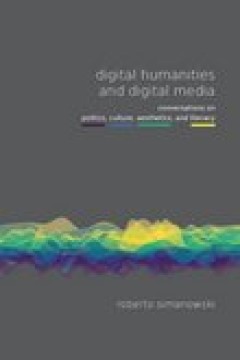
Digital humanities and digital media:conversations on politics, culture, aest…
There is no doubt that we live in exciting times: Ours is the age of many ‘silent revolutions’ triggered by startups and research labs of big IT companies; revolutions that quietly and profoundly alter the world we live in. Another ten or five years, and self-tracking will be as normal and inevitable as having a Facebook account or a mobile phone. Our bodies, hooked to wearable devices sitt…
- Edisi
- -
- ISBN/ISSN
- 9781785420306
- Deskripsi Fisik
- -
- Judul Seri
- -
- No. Panggil
- 144.2116 SIM d

Religious experience in the Hindu tradition
This Special Issue of Religions brings together a talented group of international scholars who have studied and written on the Hindu tradition. The topic of religious experience is much debated in the field of Religious Studies, and here, we present studies of the Hindu religious experience explored from a variety of regions and perspectives. Our intention is to show that the religious experien…
- Edisi
- -
- ISBN/ISSN
- 9783039210503
- Deskripsi Fisik
- -
- Judul Seri
- -
- No. Panggil
- 181.4 REL r

Scientific integrity :the rules of academic research
The growing attention for scientific integrity is part of a wider culture of professionalization and accountability − which appears to signal that integrity is no longer self-evident as a core value of professional conduct. Examples abound. But what is scientific integrity? Why does it matter? What are the issues, and what is at stake? What do we know about the nature and scope of violations …
- Edisi
- -
- ISBN/ISSN
- 9789400602182
- Deskripsi Fisik
- 182p. : ill.
- Judul Seri
- -
- No. Panggil
- 174.95072 SCH s

Urban memory and visual culture in Berlin:framing the asynchronous city, 1957…
As sites of turbulence and transformation, cities are machines for forgetting. And yet archiving and exhibiting the presence of the past remains a key cultural, political and economic activity in many urban environments. This book takes the example of Berlin over the past four decades to chart how the memory culture of the city has responded to the challenges and transformations thrown up by th…
- Edisi
- -
- ISBN/ISSN
- 9789089648532
- Deskripsi Fisik
- 212 pages : illustrations; 24 cm.
- Judul Seri
- -
- No. Panggil
- 153 WAR u
 Karya Umum
  Filsafat
  Agama
Agama  Ilmu-ilmu Sosial
  Bahasa
  Ilmu-ilmu Murni
  Ilmu-ilmu Terapan
  Kesenian, Hiburan, dan Olahraga
  Kesusastraan
  Geografi dan Sejarah