Ditapis dengan

Peer review, peer education, and modeling in the practice of clinical ethics …
This open access book about the Zadeh Project demonstrates and explores a core question in clinical ethics: how can ethics consultants be accountable in the face of a robust plurality of ethical standpoints, especially those that underwrite practices and methods for doing ethics consultation as well as those viewpoints and values encountered in daily clinical ethics practice? Underscoring this …
- Edisi
- -
- ISBN/ISSN
- 9783319909554
- Deskripsi Fisik
- viii, 228p.
- Judul Seri
- -
- No. Panggil
- 174.2

Word knowledge and word usage
Word storage and processing define a multi-factorial domain of scientific inquiry whose thorough investigation goes well beyond the boundaries of traditional disciplinary taxonomies, to require synergic integration of a wide range of methods, techniques and empirical and experimental findings. The present book intends to approach a few central issues concerning the organization, structure and f…
- Edisi
- -
- ISBN/ISSN
- 9783110440577
- Deskripsi Fisik
- IX< 717 p.
- Judul Seri
- -
- No. Panggil
- 121 WOR w

Ethics dumping :case studies from north-south research collaborations
This book provides original, up-to-date case studies of “ethics dumping” that were largely facilitated by loopholes in the ethics governance of low and middle-income countries. It is instructive even to experienced researchers since it provides a voice to vulnerable populations from the forementioned countries. Ensuring the ethical conduct of North-South collaborations in research is a proc…
- Edisi
- -
- ISBN/ISSN
- 9783319647319
- Deskripsi Fisik
- xiii, 134p. : ill.
- Judul Seri
- -
- No. Panggil
- 174.9 ETH e

Thick evaluation
"We use evaluative terms and concepts every day. We call actions right and wrong, teachers wise and ignorant, and pictures elegant and grotesque. Philosophers place evaluative concepts into two camps. Thin concepts, such as goodness and badness, and rightness and wrongness have evaluative content, but they supposedly have no or hardly any nonevaluative, descriptive content: they supposedly give…
- Edisi
- -
- ISBN/ISSN
- 9780198803430
- Deskripsi Fisik
- xi, 198 pages ; 24 cm
- Judul Seri
- -
- No. Panggil
- 170.42 KIR t

The ethics of medical data donation
This open access book presents an ethical approach to utilizing personal medical data. It features essays that combine academic argument with practical application of ethical principles. The contributors are experts in ethics and law. They address the challenges in the re-use of medical data of the deceased on a voluntary basis. This pioneering study looks at the many factors involved when indi…
- Edisi
- -
- ISBN/ISSN
- 9783030043636
- Deskripsi Fisik
- x, 198p. : ill.
- Judul Seri
- -
- No. Panggil
- 174.29069 ETH e
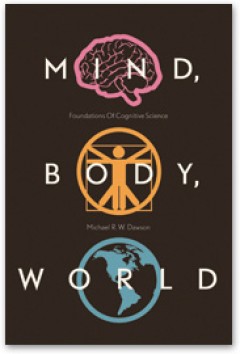
Mind, body, world :foundations of cognitive science
Cognitive science arose in the 1950s when it became apparent that a number of disciplines, including psychology, computer science, linguistics, and philosophy, were fragmenting. Perhaps owing to the fieldÕs immediate origins in cybernetics, as well as to the foundational assumption that cognition is information processing, cognitive science initially seemed more unified than psychology. Howeve…
- Edisi
- -
- ISBN/ISSN
- 9781927356180
- Deskripsi Fisik
- XV, 490 p.
- Judul Seri
- -
- No. Panggil
- 153 DAW m

Qualitative freedom :autonomy in cosmopolitan responsibility
In the light of growing political and religious fundamentalism, this open access book defends the idea of freedom as paramount for the attempt to find common ethical ground in the age of globality. The book sets out to examine as yet unexhausted ways to boost the resilience of the principle of liberalism. Critically reviewing the last 200 years of the philosophy of freedom, it revises the princ…
- Edisi
- -
- ISBN/ISSN
- 9783030047238
- Deskripsi Fisik
- x, 365p. : ill.
- Judul Seri
- -
- No. Panggil
- 123.5 DIE Q

Augmented reality :reflections on Its contribution to knowledge formation
There is at present no publication specifically dedicated to analyzing the philosophical implications of augmented reality, especially regarding knowledge formation, which constitutes a fundamental trait of knowledge society. That is why this volume includes an analysis of the applications and implications of augmented reality. While applications cover diverse fields like psychopathology and ed…
- Edisi
- -
- ISBN/ISSN
- 9783110497656
- Deskripsi Fisik
- VII, 322 p.
- Judul Seri
- -
- No. Panggil
- 100 AUG a

Moral reasoning at work :rethinking ethics in organizations
This book is open access under a CC-BY license. Moral dilemmas are a pervasive feature of working life. Moral Reasoning at Work offers a fresh perspective on how to live with them using ethics and moral psychology research. It argues that decision-makers must go beyond compliance and traditional approaches to ethics to prepare for moral dilemmas. The second edition has been updated with a rang…
- Edisi
- -
- ISBN/ISSN
- 9783030151911
- Deskripsi Fisik
- viii, 145p. : ill.
- Judul Seri
- -
- No. Panggil
- 174.4 KVA m

The ethics of vaccination
This open access book discusses individual, collective, and institutional responsibilities with regard to vaccination from the perspective of philosophy and public health ethics. It addresses the issue of what it means for a collective to be morally responsible for the realisation of herd immunity and what the implications of collective responsibility are for individual and institutional respon…
- Edisi
- -
- ISBN/ISSN
- 9783030020682
- Deskripsi Fisik
- xv, 126p. : ill.
- Judul Seri
- -
- No. Panggil
- 174.295372 GIU e
 Karya Umum
  Filsafat
  Agama
Agama  Ilmu-ilmu Sosial
  Bahasa
  Ilmu-ilmu Murni
  Ilmu-ilmu Terapan
  Kesenian, Hiburan, dan Olahraga
  Kesusastraan
  Geografi dan Sejarah