Ditapis dengan
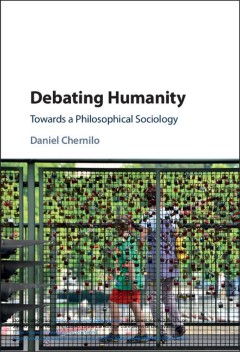
Debating humanity :towards a philosophical sociology
Debating Humanity explores sociological and philosophical efforts to delineate key features of humanity that identify us as members of the human species. After challenging the normative contradictions of contemporary posthumanism, this book goes back to the foundational debate on humanism between Jean-Paul Sartre and Martin Heidegger in the 1940s and then re-assesses the implicit and explicit a…
- Edisi
- -
- ISBN/ISSN
- 9781316416303
- Deskripsi Fisik
- vii, 262p. : ill.
- Judul Seri
- -
- No. Panggil
- 128 CHE d

Stand out of our light :freedom and resistance in the attention economy
Former Google advertising strategist, now Oxford-trained philosopher James Williams launches a plea to society and to the tech industry to help ensure that the technology we all carry with us every day does not distract us from pursuing our true goals in life. As information becomes ever more plentiful, the resource that is becoming more scarce is our attention. In this 'attention economy', we …
- Edisi
- -
- ISBN/ISSN
- 9781108453004
- Deskripsi Fisik
- xv, 134p. : ill.
- Judul Seri
- -
- No. Panggil
- 153.733 WIL s

Mental causation :a counterfactual theory
Our minds have physical effects. This happens, for instance, when we move our bodies when we act. How is this possible? Thomas Kroedel defends an account of mental causation in terms of difference-making: if our minds had been different, the physical world would have been different; therefore, the mind causes events in the physical world. His account not only explains how the mind has physical …
- Edisi
- -
- ISBN/ISSN
- 9781108762717
- Deskripsi Fisik
- x, 224p. : ill.
- Judul Seri
- -
- No. Panggil
- 128.2 KRO m

Anatomy of ethical leadership:to lead our organizations in a conscientious an…
Performance at all costs, productivity without regard to consequences, and a competitive work environment: these are the ethical factors discussed in The Anatomy of Ethical Leadership, which highlights issues in workplace culture while looking into a brighter future for labour ethics. Langlois maintains that an enhanced awareness of the process of ethical decision making in difficult situations…
- Edisi
- -
- ISBN/ISSN
- 9781897425749
- Deskripsi Fisik
- xv, 120 p. : ill. ; 23 cm.
- Judul Seri
- -
- No. Panggil
- 174.4 ANA a
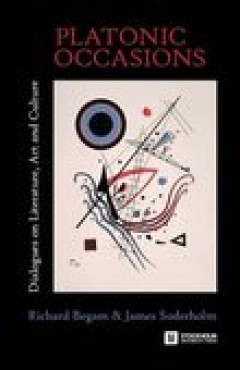
Platonic occasions:dialogues on literature, art and culture
In Platonic Occasions, Richard Begam and James Soderholm reflect upon a wide range of thinkers, writers and ideas from Plato, Descartes and Nietzsche to Shakespeare, the Romantics and the Moderns—from Evil, Love and Death to Art, Memory and Mimesis. The dialogues suggest that Percy Shelley was right when he claimed “We are all Greeks,” and yet what have we learned about the initiatives of…
- Edisi
- -
- ISBN/ISSN
- 9789176350003
- Deskripsi Fisik
- 206 p.; 22 cm.
- Judul Seri
- -
- No. Panggil
- 100 SOD p

Issues in open research data
In 2010 the Panton Principles for Open Data in Science were published. These principles were founded upon the idea that Science is based on building on, reusing and openly criticising the published body of scientific knowledge’ (http://pantonprinciples.org) and they provide a succinct list of the fundamentals to observe when making your data open. Intended for a broad audience of academics, p…
- Edisi
- -
- ISBN/ISSN
- 9781909188303
- Deskripsi Fisik
- 172 p.; 24 cm.
- Judul Seri
- -
- No. Panggil
- 174.95 ISS i

Growing Under Pressure: Bagaimana Mengubah Tekanan menjadi Kekuatan
- Edisi
- -
- ISBN/ISSN
- 978-623-00-2961-5
- Deskripsi Fisik
- xviii, 182 hlm.; 14x21 cm
- Judul Seri
- -
- No. Panggil
- 153.8 IMA g
- Edisi
- -
- ISBN/ISSN
- 978-623-00-2961-5
- Deskripsi Fisik
- xviii, 182 hlm.; 14x21 cm
- Judul Seri
- -
- No. Panggil
- 153.8 IMA g

Ini Cuma Dunia
- Edisi
- Cet.3
- ISBN/ISSN
- 978-623-00-3667-5
- Deskripsi Fisik
- xvi, 240 hlm.; 15x23 cm
- Judul Seri
- -
- No. Panggil
- 153.8 YUS i
- Edisi
- Cet.3
- ISBN/ISSN
- 978-623-00-3667-5
- Deskripsi Fisik
- xvi, 240 hlm.; 15x23 cm
- Judul Seri
- -
- No. Panggil
- 153.8 YUS i

Muda Kaya Karya: Bangun Hidup yang Dahsyat, Jangan Jadi Biasa-Biasa Saja
- Edisi
- Cet. I
- ISBN/ISSN
- 978-623-7661-10-8
- Deskripsi Fisik
- vi, 178 hlm.: Ilus; 14x20,5 cm
- Judul Seri
- -
- No. Panggil
- 158.1 MHD m
- Edisi
- Cet. I
- ISBN/ISSN
- 978-623-7661-10-8
- Deskripsi Fisik
- vi, 178 hlm.: Ilus; 14x20,5 cm
- Judul Seri
- -
- No. Panggil
- 158.1 MHD m

59 Kepribadian Paling Dicari dan Disukai Orang di Seluruh Dunia
- Edisi
- Cet. I
- ISBN/ISSN
- 978-602-182-100-8
- Deskripsi Fisik
- 140 hlm.; 13,8x19,9 cm
- Judul Seri
- -
- No. Panggil
- 155.25 SHA k
- Edisi
- Cet. I
- ISBN/ISSN
- 978-602-182-100-8
- Deskripsi Fisik
- 140 hlm.; 13,8x19,9 cm
- Judul Seri
- -
- No. Panggil
- 155.25 SHA k
 Karya Umum
  Filsafat
  Agama
Agama  Ilmu-ilmu Sosial
  Bahasa
  Ilmu-ilmu Murni
  Ilmu-ilmu Terapan
  Kesenian, Hiburan, dan Olahraga
  Kesusastraan
  Geografi dan Sejarah