Ditapis dengan
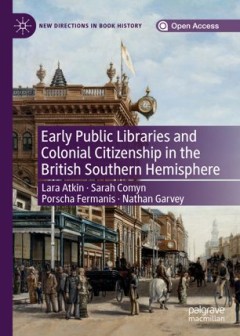
Early public libraries and colonial citizenship in the British Southern Hemis…
This open access Pivot book is a comparative study of six early colonial public libraries in nineteenth-century Australia, South Africa, and Southeast Asia. Drawing on networked conceptualisations of empire, transnational frameworks, and ‘new imperial history’ paradigms that privilege imbricated colonial and metropolitan ‘intercultures’, it looks at the neglected role of public librarie…
- Edisi
- -
- ISBN/ISSN
- 9783030204266
- Deskripsi Fisik
- XV, 159 p.
- Judul Seri
- -
- No. Panggil
- 027.409171241 EAR e
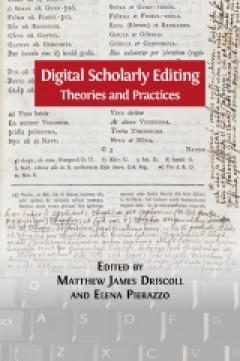
Digital scholarly editing:theories and practices
"This volume presents the state of the art in digital scholarly editing. Drawing together the work of established and emerging researchers, it gives pause at a crucial moment in the history of technology in order to offer a sustained reflection on the practices involved in producing, editing and reading digital scholarly editions—and the theories that underpin them. The unrelenting progress o…
- Edisi
- -
- ISBN/ISSN
- 9781783742400
- Deskripsi Fisik
- 290 p.; 23 cm.
- Judul Seri
- -
- No. Panggil
- 001 DIG d
Selling and collecting:printed book sale catalogues and private libraries in …
Based on the contributions given at a conference held at the University of Cagliari in September 2017, this collection of essays provides an insight into the distribution and acquisition of printed books in the sixteenth and seventeenth centuries. Publishers’ and booksellers’ catalogues are examined as evidence of the advertising and selling techniques used by agents in the book trade, with…
- Edisi
- -
- ISBN/ISSN
- 9788860565723
- Deskripsi Fisik
- 311p. : ill. ; 24 cm
- Judul Seri
- -
- No. Panggil
- 002.094 SEL s
Self-Publishing and collection development:opportunities and challenges for l…
The current publishing environment has experienced a drastic change in the way content is created, delivered, and acquired, particularly for libraries. With the increasing importance of digital publishing, more than half the titles published in the United States are self-published. With this growth in self-published materials, librarians, publishers, and vendors have been forced to rethink chan…
- Edisi
- -
- ISBN/ISSN
- 9781557539687
- Deskripsi Fisik
- vi, 198p.: ill.
- Judul Seri
- -
- No. Panggil
- 025.21 SEL s
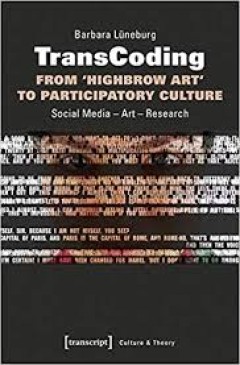
TransCoding:from "Highbrow Art" to participatory culture : social media - art…
Between 2014 and 2017, the artistic research project "TransCoding – From 'Highbrow Art' to Participatory Culture" encouraged creative participation in multimedia art via social media. Based on the artworks that emerged from the project, Barbara Lüneburg investigates authorship, authority, motivational factors, and aesthetics in participatory art created with the help of web 2.0 technology. T…
- Edisi
- -
- ISBN/ISSN
- 9783837641080
- Deskripsi Fisik
- 200 pages : illustrations (chiefly color) ; 23 cm.
- Judul Seri
- -
- No. Panggil
- 006.7 LUN t
Literacy skills as local intangible capital :the history of a rural lending l…
"This book studies the ”grey area” of the success story of rural lending libraries in the Nordic countries through the activities of people’s libraries in one area of Central Finland. The study explores the influence of social, cultural, geographical and economic phenomena, such as the spread of revivalist movements, on the reading habits of the local population and reveals interesting re…
- Edisi
- -
- ISBN/ISSN
- 9789522227966
- Deskripsi Fisik
- 364p. : ill.
- Judul Seri
- -
- No. Panggil
- 020 KOT l
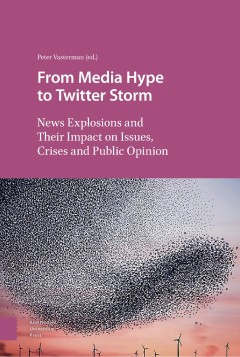
From media hype to Twitter storm :the dynamics of self reinforcing processes …
The word media hype is often used as rhetorical argument to dismiss waves of media attention as overblown, disproportional and exaggerated. But these explosive news waves, as well as - nowadays - the twitter storms, are object of scientific research, because they are an important phenomenon in the public area. Sometimes it is indeed ‘much ado about nothing’ but in many cases these media sto…
- Edisi
- -
- ISBN/ISSN
- 9789048532100
- Deskripsi Fisik
- 401p. : ill.
- Judul Seri
- -
- No. Panggil
- 070.4 FRO f

Management of research infrastructures:a South African funding perspective
This open access book provides an overview of the building blocks necessary for managing, steering and guiding the establishment of a research infrastructure (RI). It offers valuable insights into RI investment, access and management at the academic, grants management, agency and policy level, and serves as a useful guide for the research community, students, and those in the private sector wis…
- Edisi
- -
- ISBN/ISSN
- 9783030372811
- Deskripsi Fisik
- xx, 103p. : ill.
- Judul Seri
- -
- No. Panggil
- 001.44 RAM m
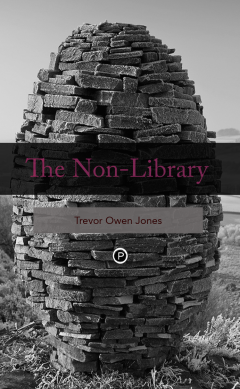
The Non-Library
The Non-Library is a non-standard expression for life that is lived without mediation from words, images, or even ideas. While a thing called “the Library” continues to terrorize humanity even as it enters its last stages as a consequence of cataclysmic climate change and late capitalism, the Non-Library is a strictly performative, ahistorical immanence that suspends the Library’s insiste…
- Edisi
- -
- ISBN/ISSN
- 9780615945446
- Deskripsi Fisik
- VI, 84 p.
- Judul Seri
- -
- No. Panggil
- 027 JON n
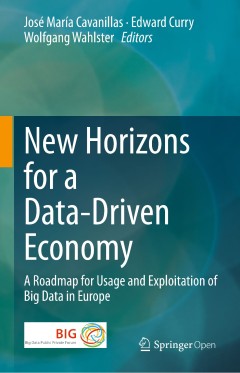
New horizons for a data-driven economy :a roadmap for usage and exploitation …
In this book readers will find technological discussions on the existing and emerging technologies across the different stages of the big data value chain. They will learn about legal aspects of big data, the social impact, and about education needs and requirements. And they will discover the business perspective and how big data technology can be exploited to deliver value within different se…
- Edisi
- -
- ISBN/ISSN
- 9783319215693
- Deskripsi Fisik
- xx, 303p. : ill.
- Judul Seri
- -
- No. Panggil
- 005.7 NEW n
 Karya Umum
  Filsafat
  Agama
Agama  Ilmu-ilmu Sosial
  Bahasa
  Ilmu-ilmu Murni
  Ilmu-ilmu Terapan
  Kesenian, Hiburan, dan Olahraga
  Kesusastraan
  Geografi dan Sejarah